


A professional mechanical manufacturing enterprise integrating independent research and development, production, and sales


Take you to have a deeper understanding of the slit coating process
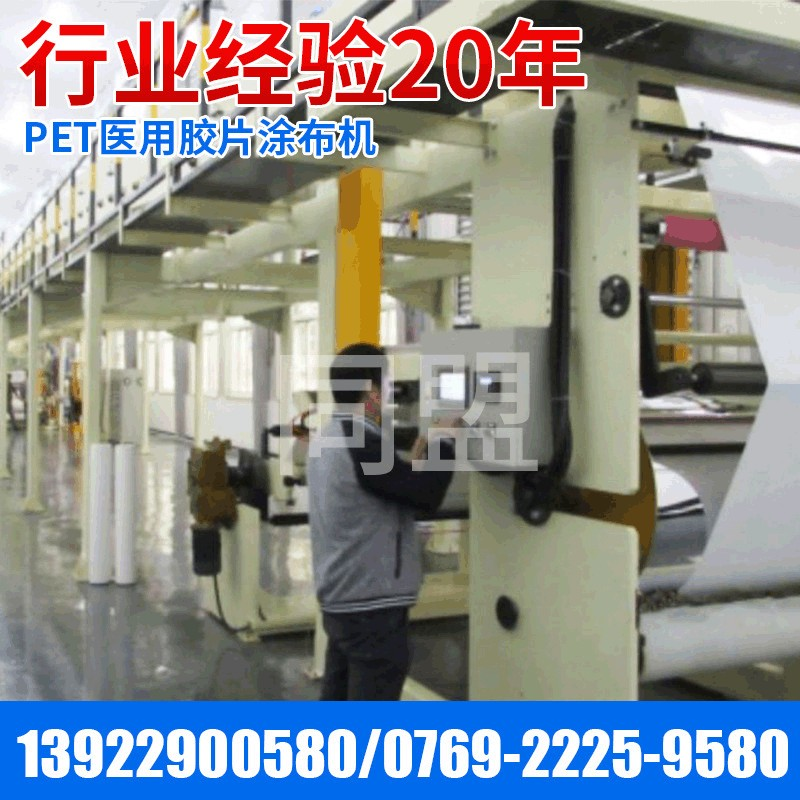
Slot Die Coating is a high-precision coating method, which is not only used for the coating of electronic fabrics (FPC, RCC, CSP, LOC, etc.), optical films (brightness enhancement film, hardcoat, polarizing film, diffusion film, etc.), battery plates and other coiled substrates, but also for the photoresist coating of discontinuous substrates such as LCD glass substrates. The principle of operation is to pump a certain amount of fluid into a mold that can evenly unfold the fluid. Unlike coating systems, where the coating fluid is wiped onto the substrate, our slit coating dies are coating dies with relatively large lip gaps (up to 0.0762 mm), from which the liquid drawn from the lip gap can form coatings as thin as 1 μm. The narrow slit coating die can control the amount of coating over the entire width within a tolerance range of about 2.5% ± with a coating thickness of only 2 μm. The lip of the slit coating dies we produce is fixed, so the thickness and width of the coating can be varied with interchangeable gap control plates. Coating thicknesses ranging from less than 1 μm to 254 μm. These dies can process various types of adhesives (including special transparent adhesives) batteries, ceramic capacitors, decorative surfaces, electronic display media, filter membranes, flooring, fuel cells, magnetic slurries, medical products, photoresist materials, pressure-sensitive tapes, solar cells, superconductors, tear tapes and window films. The die lip of the die head is fixed, and the gap between the die lip is adjusted with a gap filler. Instead of "spreading" the coated stream onto the substrate like an adjustable die, the die bonds the stream to the substrate by sucking it out of a relatively large lip gap. This wet coating thickness can be as thin as 2 μm. Based on this wet coating process, the die system is particularly suitable for ultra-thin or clear coatings." At present, many coating manufacturers use both roller and seam die coating processes. Roller coating is a traditional process in which the amount of material applied to the substrate is indirectly controlled by a scraper or a pre-set roll gap; The excess coating material is scraped off and sent back to the coating tank; The coating tank itself is open in the workshop. In contrast, seam dies are very different. Firstly, it is a closed system, and secondly, it is pre-metered with a precision metering pump. It is based on these two points that seam dies offer some advantages that roller coating does not have: ●The coating weight and overall distribution are more uniform; ●The production line speed is faster; ● Minimizes volatile emissions, coating contamination, raw material waste, and workplace chaos. Our slit coating dies are available in coating widths up to (3 m) and wet coating thicknesses from 2 μm to 254 μm. Slit coating dies are typically supplied as part of a packaged system, but others include positioners (to maintain precise orientation to the rollers), vacuum chambers (to remove air entrained in the coating stream from the distance from leaving the die to contacting the substrate surface), and material flow delivery equipment (filters, pumps, drives, and airers). As an option, a die operation mechanism called a "hinge" can be added to the positioner to allow the operator to quickly disassemble and clean the die, replace the gap filler if necessary, and re-tighten the mold. |

Scan for business consultation

Business dedicated line:13922900580
Telephone: +86-0769-22259580 22259567
Telephone of Fujian office: 13959892567
Telephone of Jiangsu office: 13712371818
Address: •No. 12, 2nd Road, Wentang Cixia Industrial Zone, Dongcheng Street, Dongguan City, Guangdong Province, China